
New Delhi [India], December 25: Good Governance Day 2025 was not about speeches and slogans. It was about shipping real systems. Five of them, to be precise.
Why Good Governance Day 2025 mattered
December 25 is not just a date on the calendar. It marks Good Governance Day, observed every year on the birth anniversary of former Prime Minister Atal Bihari Vajpayee. His core belief was simple. Governance must be clean, humane, and effective.
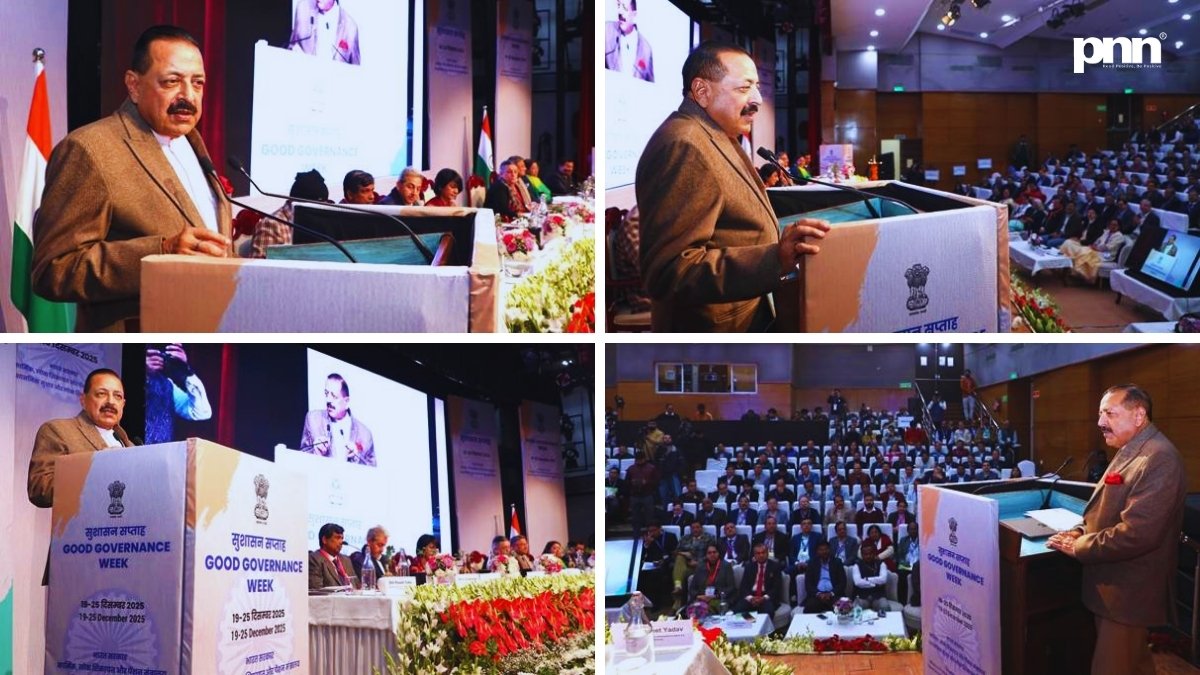
Speaking in New Delhi at the National Workshop on Good Governance Practices 2025, Union Minister Dr. Jitendra Singh made it clear that this was not a nostalgia event. It was a delivery event.
Good governance, he said, is not an abstract theory. It is daily administration. Files. Rules. Approvals. Outcomes.
Under Prime Minister Narendra Modi’s leadership since 2014, the idea of “Minimum Government, Maximum Governance” has moved from slogan to system. Good Governance Day 2025 digital reforms were designed to push that shift further, using technology as leverage rather than decoration.
Five Good Governance Day 2025 digital reforms that actually matter
The Department of Personnel and Training rolled out five initiatives. Each targets a pain point that civil servants and citizens know too well.
No fluff. No pilot projects stuck in limbo.
Here’s what was launched.
Ex-Servicemen reservation, finally simplified
The first reform is a Compendium of Guidelines on Reservation for Ex-Servicemen in Central Government.
This may sound bureaucratic. It is not.
Until now, reservation rules for ex-servicemen were scattered across multiple circulars, amendments, and office memoranda. Different ministries interpreted them differently. Errors followed. Delays followed faster.
The new compendium consolidates all existing instructions into a single, updated reference. Clear language. Uniform interpretation. Fewer excuses.
Dr. Jitendra Singh framed it plainly. This is about honouring service, not complicating it. When benefits are delayed because rules are unclear, governance has failed. This reform fixes that gap.
AI enters recruitment rule-making
The second launch is where things get interesting.
The AI-powered Recruitment Rules Generator Tool, integrated into the RRFAMS portal, brings artificial intelligence into one of the most delay-prone processes in government.
Recruitment Rules decide how people are hired, promoted, and progressed. They are foundational. They are also notoriously slow to draft and amend.
The new tool works through guided questions. It suggests recruitment methods. It auto-generates draft rules in the prescribed format. And it stays aligned with DoPT guidelines by default.
This is not AI replacing decision-makers. It is AI removing friction. Less time formatting. More time deciding.
For a system that runs on rules, this is a quiet but serious upgrade.
e-HRMS 2.0 goes mobile
The third reform puts governance in your pocket.
The e-HRMS 2.0 mobile app, now available on Android and iOS, extends the government’s human resource backbone to smartphones.
Built under Mission Karmayogi, e-HRMS 2.0 integrates service records and HR processes across an employee’s lifecycle. Promotions. Transfers. Deputations. Training. Superannuation.
It also links with platforms like SPARROW, PFMS, and Bhavishya.
The result is fewer paper files, faster approvals, and more transparency. Government employees no longer need to chase desks for basic updates. The system speaks for itself.
This is what citizen-centric governance looks like internally. If the state treats its own people better, service delivery improves by default.
iGOT Karmayogi gets smarter with AI
The fourth set of Good Governance Day 2025 digital reforms focuses on capacity building.
The iGOT Karmayogi platform now comes with multiple AI-enabled features:
- iGOT AI Sarthi for discovering relevant learning resources
- iGOT AI Tutor for personalised support during courses
- iGOT Specialisation Programme offering structured learning paths
- AI-based Capacity Building Plan Tool for mapping roles, skills, and training needs
This is not generic e-learning. It is targeted, role-based upskilling.
For a civil service facing rapid policy, tech, and societal shifts, this matters. Training is no longer optional. It is operational readiness.
India is betting that better-trained officers lead to better outcomes. That bet is backed by platforms, not platitudes.
Karmayogi Digital Learning Lab 2.0
The fifth initiative is about content quality.
The Karmayogi Digital Learning Lab 2.0 is a next-generation facility designed to produce modern digital learning material. Think AR, VR, gamification, and interactive simulations.
This is not about flashy tech demos. It is about faster dissemination of best practices and reforms across services.
Dr. Jitendra Singh said the upgraded lab will strengthen implementation capacity on the ground. Translation: policies only work when people know how to execute them.
This lab is where that execution muscle gets trained.
Governance reform, Indian style
DoPT Secretary Rachna Shah added context that often gets missed.
During Good Governance Week, the Prashasan Gaon Ki Ore campaign reached over 700 districts. Thousands of camps were organised. Grievances addressed. Services delivered. Best practices documented.
Since 2021, Special Campaigns have shifted administrative culture from pendency-driven to outcome-oriented. Less backlog. Better space use. Tangible revenue gains.
This is slow, unglamorous work. It is also how systems change.
Taken together, the Good Governance Day 2025 digital reforms show a coherent approach. Technology is not being layered on top of broken processes. It is being used to fix them.
For readers tracking governance reform, this fits into a broader arc. From digital payments to online grievance redressal, India has been quietly building state capacity through platforms.