

Education

Health
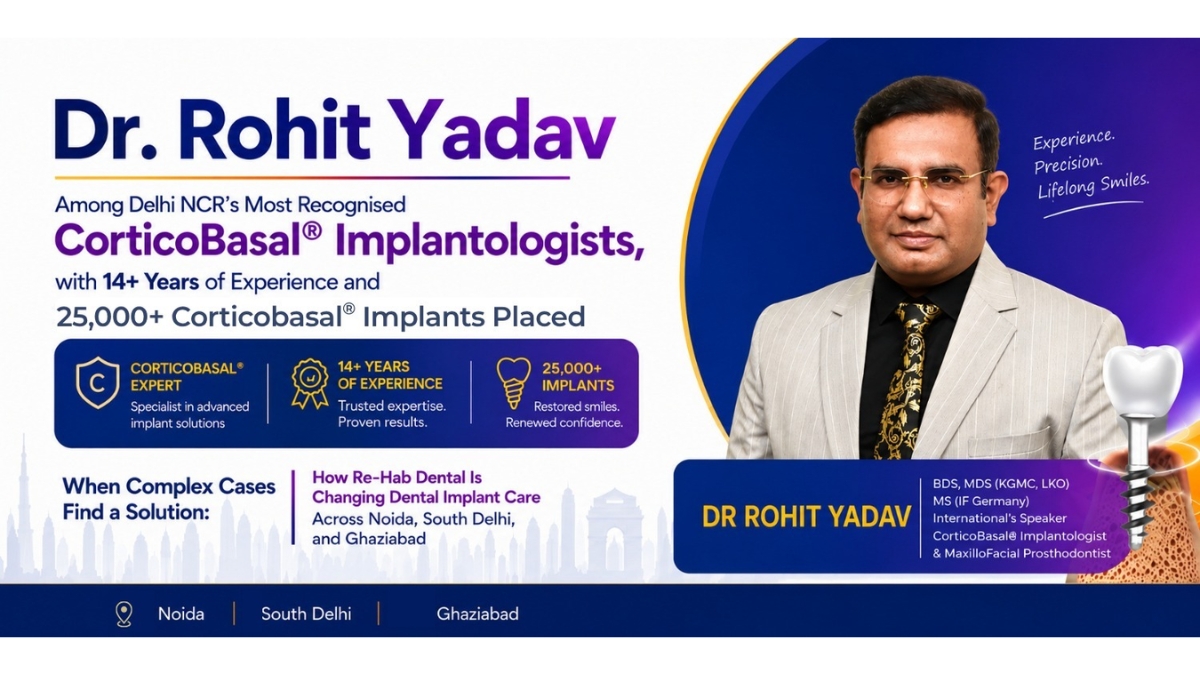
Dr. Rohit Yadav — Among Delhi NCR’s Most Recognised Corticobasal® Implantologists, with 14+ Years of Experience and 25,000+ Corticobasal® Implants Placed
When Complex Cases Find a Solution: How Re-Hab Dental Is Changing Dental Implant Care Across Noida, South Delhi, and Ghaziabad
Noida (Uttar Pradesh) [India], May 28: For patients across Delhi NCR who have been told that their case is “too complex”, “needs bone grafting first”, or “will take over a year”, Dr. Rohit Yadav at Re-Hab Dental has quietly become a name that changes that conversation.
With 14+ years of focused implant practice, advanced international training in Corticobasal® Implantology, and 25,000+ Corticolbasal® implants placed across his career, Dr. Rohit Yadav has built a reputation not on marketing promises, but on case outcomes that speak for themselves.
A Case That Travelled from Iraq to Noida
In January 2020, a 20-year-old Iraqi boy named Karam Waad arrived in Delhi with his father. Karam had lost his teeth after a severe fall in childhood. By the time he reached India, he had never eaten solid food in his life. He had survived entirely on liquids.
Read case study: When Destiny Brought A Smile To This Iraqi Boyʼs Face – Dr Rohit Yadav
He had visited multiple implantologists. Every one of them declined. Some cited severe bone loss. Others suggested complicated bone-grafting procedures lasting up to 1.5 years, with no certainty of success even after that.
Then Karam and his father found their way to Re-Hab Dental, Noida Sector 41.
Dr. Rohit Yadav examined the case. The bone atrophy was significant. But rather than turn the family away, he outlined a plan using Corticobasal® implants — a technique that anchors into cortical and basal bone structures deeper in the jaw, making it suitable for selected patients with reduced conventional bone support.
The full treatment was completed in 8 days.
Karam, who had never chewed a single morsel of food in his 20 years of life, attended a short therapeutic session afterwards to learn the mechanics of chewing — something most of us take for granted. The day he finally tasted solid food is described by those who witnessed it as one they will never forget.
This is not a promotional story. This is a documented case — a real patient, a real father, a real outcome that multiple doctors in two countries had considered impossible. It was reported widely and is on record.
Fixed Teeth in a Shorter Time — In Selected Cases
One of the most common questions patients ask at Re-Hab Dental is whether fixed teeth can be placed quickly after implants.
The honest answer from Dr. Rohit Yadav’s practice is this: in selected cases, immediate functional loading protocols used at Re-Hab Dental may allow patients to begin chewing within approximately 48 hours of implant placement, and full-mouth implant cases may be completed in a few days where oral condition, bone support, medical history, and treatment planning allow for it.
Corticobasal® Dental Implants are suitable for almost all patients, including some who may have been told they cannot receive implants elsewhere due to low bone. Final suitability, however, is confirmed only after clinical and radiographic evaluation.
“Fixed teeth options within a shorter timeline are possible in suitable cases after proper examination and planning,” is how Dr. Yadav’s team describes it. Patients are evaluated individually. No case is treated using a template.
International Training. Local Practice. Delhi NCR Reach.
Dr. Rohit Yadav completed his postgraduation in Prosthodontics and Oral Implantology from King George Medical College (KGMC), Lucknow. He then pursued advanced training in Munich, Germany, earning a Master’s in Strategic Implantology under Prof. Dr. Stefan Ihde — a leading figure in the field internationally.
He is recognised as a Certified International Teacher and Speaker in Strategic Implantology, a distinction conferred in St Petersburg, Russia, through the International Implant Foundation. His training and clinical experience span Corticobasal® implants, immediate loading protocols, flapless implant surgery, full-mouth rehabilitation, and implant care for selected diabetic patients and complex resected cases.
In addition to running Re-Hab Dental, Dr. Yadav has trained dentists internationally. His approach to difficult cases — including no-bone situations, atrophied jaws, failed implant cases, and patients with systemic conditions — has drawn patients and dental professionals from across India and abroad.
His clinical recognition includes:
- Best Patient Care Award — 2021 and 2023
- Best Practice & Team Award — 2022
(Awards as listed on drrohityadav.com)
Why Patients Come From Across Delhi NCR — and Beyond
Re-Hab Dental serves patients from Noida, Greater Noida, Ghaziabad, Delhi, Faridabad, Gurugram, Agra, Mathura, Meerut, Haryana, Pune, Bengaluru, Patna, Amritsar, Mumbai, Jammu & Kashmir, Jaipur, Kolkata, and many other cities across India, as well as from overseas. What brings them here is not necessarily proximity. It is the nature of the cases Dr. Yadav accepts.
Cases that arrive at Re-Hab Dental often include:
- Full mouth implant cases where multiple or all teeth are missing
- No bone or low bone cases where conventional implant surgery is not straightforward
- Patients with diabetes who may be considered for implant treatment after a detailed medical and dental evaluation
- Resected cases involving prior jaw surgery or structural compromise
- Patients with failed implants from previous treatment
- International patients seeking advanced implant care with shorter treatment timelines, where suitable
Each case begins with a consultation, clinical examination, and, where needed, radiographic review. Treatment is planned after understanding the patient’s oral health, medical history, bone condition, and treatment needs. Nothing is decided before this step.
Re-Hab Dental — Three Locations Across Delhi NCR
Re-Hab Dental operates across three accessible locations in the Delhi NCR region, making specialist implant consultation reachable for patients across the urban spread.
Re-Hab Dental — Noida (Primary Centre) J-7, Sector 41, Noida — 201303 (Main Dadri Road)
08795006097 | 09871399847  Monday to Saturday: 10:00 am to 9:00 pm
Re-Hab Dental — South Delhi C/o VNA Hospital, 1, Navjeevan Vihar, Geetanjali Enclave, Malviya Nagar, New Delhi — 110017 | 08510975866
Re-Hab Dental — Ghaziabad FF 2, 1st Floor, River Height Plaza, Raj Nagar Extension, Ghaziabad, Uttar Pradesh — 201017 | 09821815012
All three centres are linked by the same clinical philosophy: evaluation first, treatment planning second, and a clear conversation with the patient before any decision is made.
For Patients Who Have Heard “It Cannot Be Done”
Not every dental implant case is straightforward. Bone loss, systemic conditions, previous failed treatments, and jaw structure changes can make standard implant surgery insufficient or unsuitable.
At Re-Hab Dental, these are precisely the cases that Dr. Rohit Yadav’s training has been built around. CorticoBasal® implants and Strategic Implant protocols were developed specifically for situations where conventional implantology hits its limits — and Dr. Yadav has spent over a decade applying them in clinical practice.
Karam Waad’s case is one example. There are many others — quieter ones — patients from across India and the region who arrived after years of failed attempts, significant bone loss, or medical complications, and left after treatment completion with a fixed set of teeth.
The outcomes depend on case complexity, oral health, treatment planning, and post-treatment care. But the option of a consultation — of having the case actually examined — is the first step that many of these patients had not found until they came here.
Book a Consultation
Patients with missing teeth, loose dentures, failed implants, or questions about implant suitability in low-bone or medically complex cases are encouraged to book a consultation at any Re-Hab Dental location.
A clinical examination and discussion with Dr. Rohit Yadav’s team will confirm what may be possible for your specific case — without obligation and without assumptions.
Call or WhatsApp: +91 87950 06097
Website: www.re-habdental.com | www.drrohityadav.com
Address: Noida Sector 41 | South Delhi — Malviya Nagar | Ghaziabad — Raj Nagar Extension
About Dr. Rohit Yadav
Dr. Rohit Yadav is a Strategic Implantologist, Prosthodontist, and Corticobasal® Implantologist based at Re-Hab Dental, Noida Sector 41. He holds an MDS from King George Medical College, Lucknow, and a Master’s in Strategic Implantology from Munich, Germany, under Prof. Dr. Stefan Ihde. He is a Certified International Teacher and Speaker in Strategic Implantology through the International Implant Foundation. His clinical focus includes full-mouth dental implants, immediate loading protocols, no-bone and low-bone implant cases, flapless implant surgery, and complex implant care for selected medically compromised patients. He has placed 25,000+ implants across his career and trained dental professionals internationally.
About Re-Hab Dental
Re-Hab Dental is a dental implant and multispeciality dental clinic group operating across Noida Sector 41, South Delhi (Malviya Nagar), and Ghaziabad (Raj Nagar Extension). The clinic was founded on the principle that patients — especially those with difficult or complex cases — deserve a proper clinical consultation before being told what is and is not possible. Re-Hab Dental operates Monday to Saturday, 10 am to 9 pm, at its primary Noida centre.
Contact: Re-Hab Dental | +91 87950 06097
Email ID: [email protected]
Website: www.re-habdental.com
This press release is for general informational purposes. Treatment outcomes depend on individual oral health, bone condition, medical history, and clinical evaluation. Patients are advised to consult Dr. Rohit Yadav or a qualified dental professional for assessment of their specific case.

Business
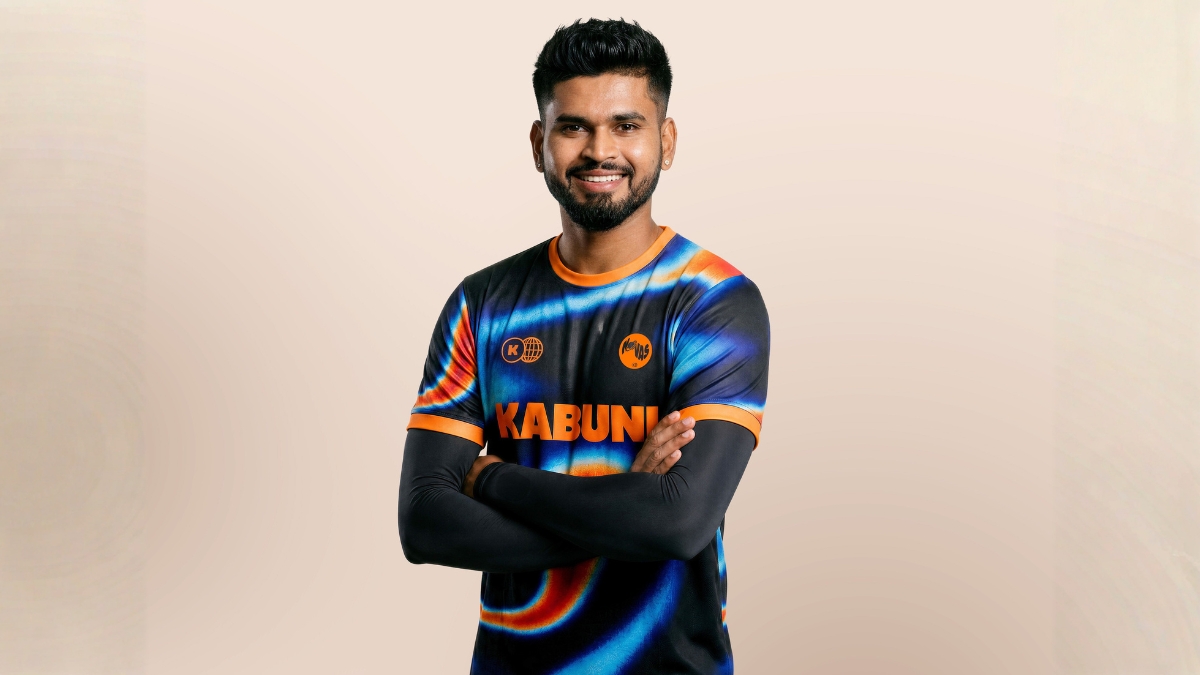
Kabuni Secures Shreyas Iyer as Super Coach to Advance Its Vision for Global Cricket Training
Kabuni secures Shreyas Iyer as their Super Coach.
Mumbai (Maharashtra) [India], June 05: Kabuni, the AI-powered sports technology platform redefining cricket training, today announced onboarding one of India’s most dynamic batting talents, Shreyas Iyer, as Super Coach.
Iyer joins a growing roster of legendary Kabuni Super Coaches including Sourav Ganguly, Shane Watson, and AB de Villiers – all four will appear at the Kabuni Showcase in Mumbai on 7th June where Kabuni formally unveils its platform and opportunities for schools, parents, and aspiring cricketers in India.
Central to the launch is a new nationwide youth tournament, “Want to Play for a Legend?” open to cricketers aged 12–16 and launching in June. Participants will compete using Kabuni’s technology for the chance to play in Shreyas Iyer’s team — putting the platform’s real-time feedback tools at the heart of the selection process.
Kabuni tracks player movement and ball data in real time, translating it into practical, personalised feedback delivered through voice, video, and visual guidance. The platform is built around a “1% improvement” philosophy — incremental adjustments that compound into meaningful development over time. Leveraging biomechanics and motion tracking, it is designed to make the kind of coaching previously available only at elite level accessible to players at every stage of the game.
Kabuni’s platform modernises cricket training by tracking player movement and ball data in real time, turning it into clear, practical feedback. Built around a “1% improvement” philosophy, it helps players make small adjustments that deliver meaningful gains over time. Using voice, video, and visual guidance, the platform makes feedback simple to understand and apply, especially for younger players.
The all-star Super Coach line-up marks another momentous step forward in Kabuni’s mission to make world-class cricket coaching accessible to players at every level, with a flagship youth tournament launching in India later this year. Fans aged between 12-16 will be able to compete for the chance to play for Iyer’s team through a new nationwide tournament, ‘Want to Play for a Legend?’, launching in June and using Kabuni’s technology.
With another cricket legend putting their support behind the brand, Kabuni strengthens its mission to combine world-class cricket expertise with accessible technology, making high-quality coaching available beyond the professional game. The platform leverages biomechanics, motion tracking, and performance data to deliver personalised, real-time insights, helping players accelerate their development.
Shreyas Iyer, Super Coach, Kabuni, said:
“The depth of talent in Indian cricket is currently unprecedented. What’s missing isn’t ability — it’s access to the kind of feedback that tells you exactly what to work on. The margins between where you are and where you want to be are narrow — and that’s exactly what Kabuni is about. Giving young players the tools to close that gap faster than I could in my early years.”
Nimesh Patel, Founder & CEO, Kabuni, said: “Shreyas Iyer represents the modern cricketer – explosive, energetic, and always looking to move the game forward. Just as importantly, his mentality reflects Kabuni’s wider vision: a platform built to develop complete cricketers, blending technical progression with mental strength to help players perform with conviction, intelligence, and self-belief.”
As Kabuni continues to expand its footprint, Iyer’s appointment reinforces its ambition to build a globally relevant, technology-led coaching ecosystem – one that bridges the gap between grassroots participation and elite performance.
If you object to the content of this press release, please notify us at [email protected]. We will respond and rectify the situation within 24 hours.