
Mumbai (Maharashtra) [India], October 24: A film does not always need a bigger opening weekend to find a larger audience. Sometimes, it needs a second opportunity—and fewer barriers between the story and the people who might connect with it.
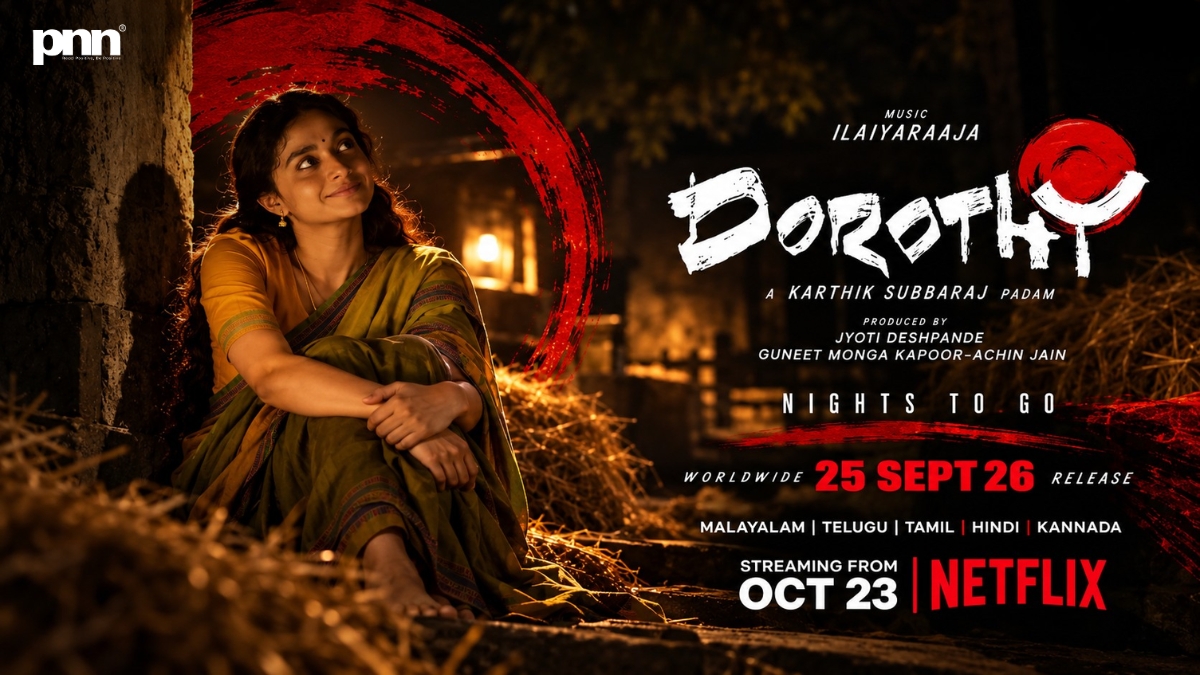
Karthik Subbaraj’s Tamil drama Dorothy arrived on Netflix on October 23, 2026, with audio options in five languages: Tamil, Telugu, Kannada, Malayalam and Hindi. Starring Keerthy Suresh, Sananth and Rishikanth, the film explores a world shaped by social prejudice and toxic masculinity, placing questions of identity, compassion and belonging at the centre of its narrative. Its digital release gives viewers who missed its theatrical run another way to encounter a story outside the usual commercial formula.
The bigger story, however, is not simply that another Tamil film has arrived on a streaming platform. It is whether multilingual distribution can help socially unconventional films find audiences without diluting the specificity that makes their stories worth telling.
A Story That Does Not Fit Neatly Into A Genre
Set in rural Tamil Nadu in the 1990s, Dorothy brings together friendship, social hierarchy and the consequences of challenging established norms. Keerthy Suresh plays the titular character, whose arrival unsettles the world of two longtime friends. The film’s treatment of marginalised identities gives its drama a social dimension beyond its crime-story framework.
The film also had a life beyond the conventional theatrical launch. It premiered at the Toronto International Film Festival on September 11 before its theatrical release on September 25. The Netflix debut follows less than a month after its cinema opening, offering the production another distribution window.
That quick transition has advantages. Viewers who were unable to find the film at a nearby cinema—or were uncertain whether its subject justified a ticket—can now watch it at home. The platform also reduces the geographical limitations that often affect regional films seeking audiences outside their primary language market.
Of course, availability is not the same as universal appeal. A film that challenges social assumptions may attract discussion, but it may also divide viewers. That tension is not necessarily a commercial failure; it is a reminder that representation can provoke disagreement rather than instant consensus.
Five Languages, One Commercial Opportunity
The multilingual release is an important part of the film’s distribution strategy. By offering five audio versions, Netflix lowers the language barrier for audiences across several major Indian markets. It also gives the film a chance to reach viewers who might not ordinarily select a Tamil-language title.
The potential benefits include:
- Wider discoverability: Viewers can explore a film without needing fluency in its original language.
- A longer commercial life: The streaming release gives the production another opportunity to find an audience after its theatrical run.
- More room for unconventional stories: Digital catalogues can make films with niche themes accessible beyond the locations where they initially screened.
But dubbing alone cannot guarantee success. Recommendations, promotion, viewer interest and the quality of the adaptation all influence whether a title gets watched. Five language options create five routes into the story; they do not automatically create five successful markets.
Representation Needs More Than A Streaming Slot
Dorothy arrives amid continuing conversations about how Indian films portray gender, identity and marginalised communities. The 2025 edition of the OWomaniya! study examined 122 theatrical and streaming properties released in 2024, highlighting persistent disparities in representation. Its findings suggest that streaming has performed better than theatrical cinema on some measures, although meaningful gaps remain.
That context matters because visibility alone is a limited measure of progress. A character can be present on screen without being afforded complexity, agency or a life beyond the social issue they represent. Films about transgender lives must also contend with the risk of reducing diverse experiences to a single narrative or using marginalisation merely as a source of emotional impact.
The value of Dorothy will therefore depend not just on how many people press play, but on how its characters are written, how audiences engage with their experiences and whether the film encourages a more considered conversation.
The Economics Behind The Second Release
The film’s producers include Karthik Subbaraj under Dhammam Films, alongside Guneet Monga Kapoor and Achin Jain of Sikhya Entertainment, and Jyoti Deshpande of Jio Studios. Ilaiyaraaja composed the music, adding another established creative name to the production.
However, neither the film’s verified production budget nor its total marketing expenditure is publicly established in the sources reviewed. Its theatrical gross and Netflix acquisition fee also cannot be reliably stated here. A streaming premiere does not disclose whether a film has recovered its costs, earned a profit or secured a particular licensing payment.
For producers, the wider distribution opportunity is real, but commercial success still depends on the terms of the streaming agreement, production expenditure and the film’s overall revenue. For Netflix, a title such as Dorothy adds diversity to its catalogue and gives audiences another reason to explore Indian-language cinema.
A Wider Audience Is A Beginning, Not An Ending
Dorothy represents an opportunity for regional storytelling to travel further without abandoning its cultural setting. Its multilingual availability makes the film more accessible, while its themes offer room for discussion beyond conventional genre expectations.
Yet streaming platforms should not mistake availability for impact. The more meaningful questions concern who watches, how the story is received, and whether similarly unconventional films continue to receive investment and distribution.
A film can cross language barriers in a single release. Changing the assumptions surrounding the people it depicts is slower work—and no subtitle track can do that alone.