

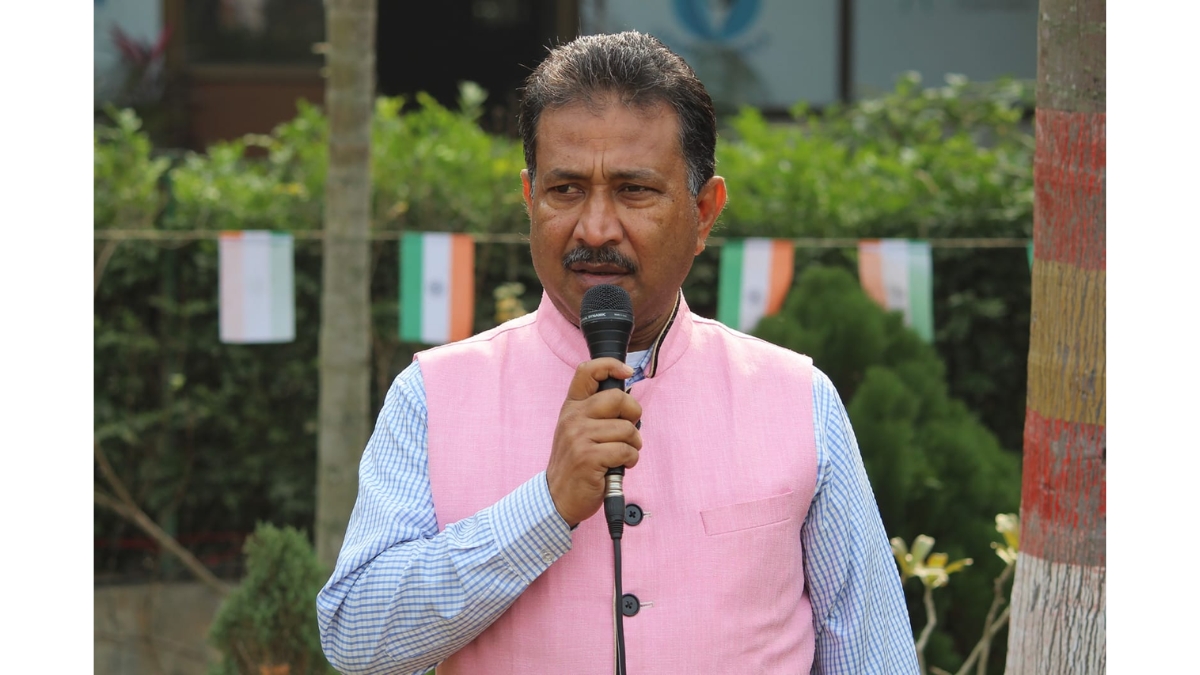
The distance from a Bengal paddy field to the House of Commons cannot be measured in miles. Malay Pit has walked it anyway.
Bengaluru (Karnataka) [India], August 4: In the wood-panelled halls of Westminster’s most storied chamber, a medical college from a small town in India’s Northeast was written into the World Book of Records — the first new medical college to fill every one of its 150 first-year seats, with students drawn from more than twenty states, in its very first session. It was a moment of quiet triumph, applauded thousands of miles from home. Few in that room, perhaps, knew how unlikely the road behind it had been — that the man whose vision it represented had begun life not in a boardroom or a hospital, but in a paddy field.
Born to the soil
Malay Pit was born into a humble farming family in rural West Bengal. His father, the late Bhairab Chandra Pit, spent his whole life working the land to give his family a life of dignity; his mother held the household together with a quiet, unshakeable strength. Malay grew up amid fields and farmland, and learned early the rhythms — and the cruelties — of agrarian life: the uncertain harvest, the anxious wait for rain, the endless effort that never quite adds up to security. Many would have accepted that as their lot. He did not. He resolved not only to climb out of poverty himself but to build the ladder for others still trapped in it. The conviction that would shape the next three decades was born there, in the soil: that no one’s future should be decided by the circumstances of their birth.
Building the ladder
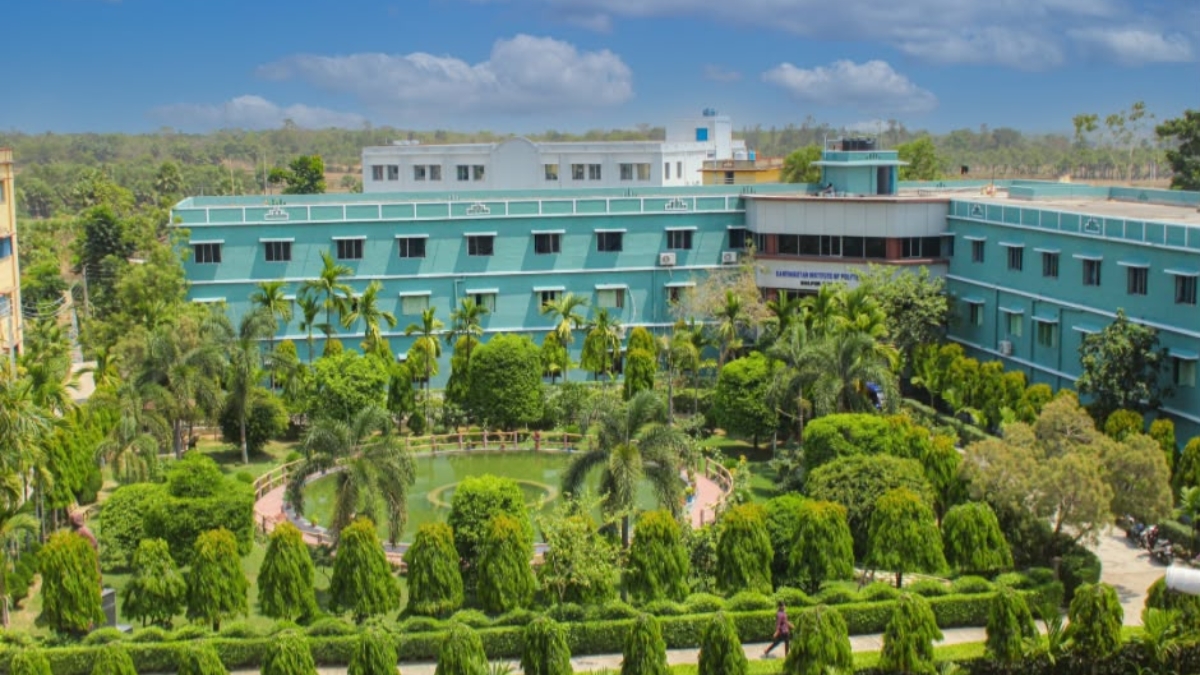
In 2009, he founded SWADHIN — the Society for Welfare & Development of Human Initiatives — in the countryside near Bolpur, in Birbhum, a district the world knows for Rabindranath Tagore’s Santiniketan rather than for professional education. He began where the need was greatest: with skills. The Santiniketan Institute of Polytechnic opened its doors in 2010, offering diploma engineering to village youngsters who might never otherwise have held a professional qualification. Around it grew a web of Industrial Training Institutes — his own, and others run in partnership — reaching from Bengal to Assam and as far as Port Blair in the Andaman Islands. The idea was simple, and it came straight from his own life: give a young person a real skill, and a real job at the end of it, and you change not just their fortunes but their family’s. Teacher-training colleges followed, then a school for younger children and short vocational courses under national skilling schemes. Piece by piece, Malay Pit was assembling the education ladder he himself had never been offered.
Medicine for ten rupees
Then, in 2020, came the leap few saw coming. The Trust opened the Santiniketan Medical College & Hospital at Gobindapur, Bolpur — recognised as India’s first medical college built through a public-private partnership under the National Medical Commission Act, within a framework encouraged by NITI Aayog. A farmer’s son had built a medical college. But it was how the hospital chose to serve that revealed the man behind it. Through its charitable wing, patients could see a doctor for as little as ten rupees, with steep discounts on medicines for those who could least afford them. For families who had long treated a hospital visit as a luxury, it was more than a discount; it was dignity. Around the college, the Trust built a complete health-education ecosystem — nursing, paramedical and allied-health institutes — training the very people who would go on to staff its wards.
Crossing into the Northeast
By 2024, the model had outgrown a single state. The Trust established Tripura Santiniketan Medical College & Hospital near Agartala, carrying its education-and-healthcare mission into India’s Northeast — a region where advanced care and medical education had long been scarce, and where families routinely travelled hundreds of kilometres for treatment. In its first session, the college filled all 150 MBBS seats with students from more than twenty states, a feat recognised first by the India Book of Records, then the Asia Book of Records, and finally the World Book of Records. “This recognition is not just ours,” Malay Pit said; it belonged, he insisted, to the people of Tripura and the nation.
The next generation
If Malay Pit is the founder who built it all from nothing, his son Sougata Pit is the generation carrying it forward. As Administrative Director of both medical colleges, Sougata Pit oversees operations across the Trust’s more than fifty institutions, helping it grow further. A computer-science graduate who grew up in the same village his father came from, he brings a new generation’s perspective to a deeply human mission. It is a familiar and moving Indian story: the first generation builds with its hands; the next carries the same promise further.
Not infrastructure — hope
Through all of it, the Trust has never lost its grassroots character. Its campuses hold blood-donation camps each Teacher’s Day, distribute food, clothing and blankets to tribal and backward communities at Durga Puja, and plant thousands of trees through the pandemic. And Malay Pit’s ambitions have only grown — toward healthcare that reaches the remotest village, education that runs seamlessly from KG to PG, and a pledge to plant trees by the million.
“We are not just creating infrastructure,” he says. “We are creating hope.” It is a long way from a Bengal paddy field to the House of Commons. Malay Pit has walked exactly that distance — and, characteristically, he has spent the journey making the road shorter for everyone coming up behind him.