

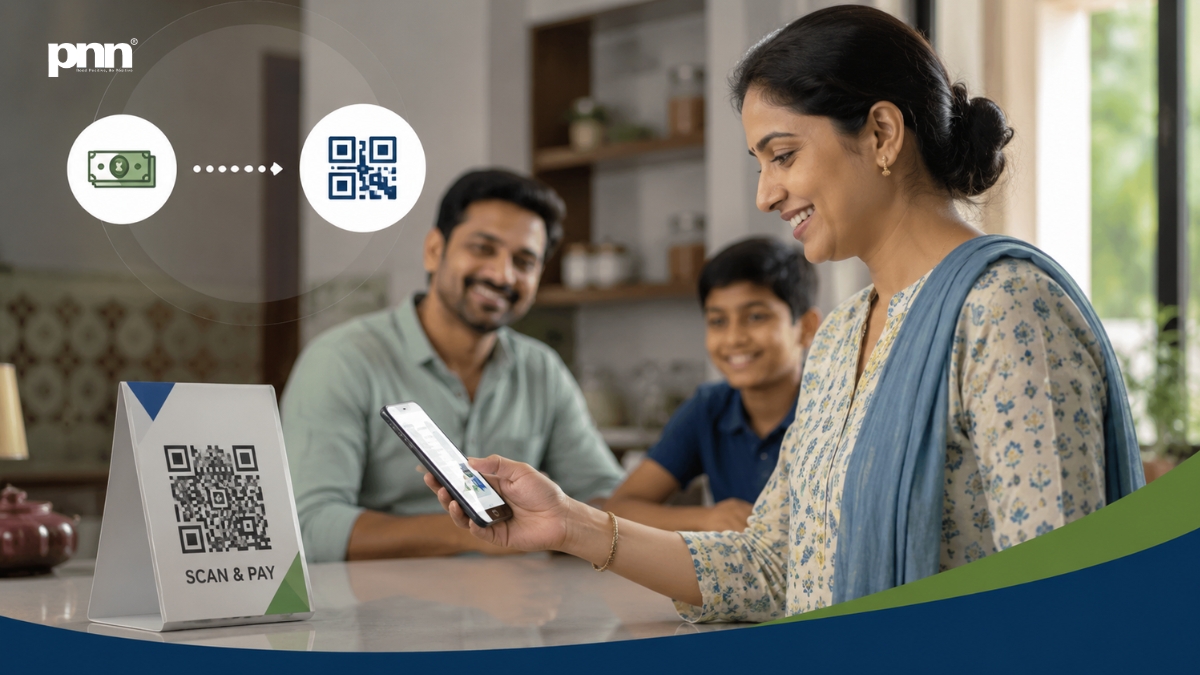
Mumbai (Maharashtra) [India], July 29: My neighbor’s mother is seventy-one now. Just a couple of years back, she kept that little steel box of coins and crumpled notes on top of her cupboard—exactly the way she always had. Some for the milkman, some for the maid, a few tucked away for the umbrella-fixer who dropped by. These days, the box sits mostly untouched, gathering dust. She pays the milkman by scanning a QR code that’s taped to his cycle. She’s not especially comfortable with technology, and she’ll admit she still doesn’t really get how the money “travels” from her phone to his. But that’s okay. She does it without a second thought, several times a day.
That’s pretty much the story of payments in India lately. The shift from cash snuck in, quietly. Not with big announcements—just QR codes popping up at tea stalls, vegetable carts, street corners. One scan at a time, until suddenly, cash didn’t feel so necessary.
It all started with convenience, not grand ideas
Nobody, honestly, switched to UPI because they believed in a “cashless economy.” People started using it because it solved a daily headache: never having enough change. Ask any Mumbai autorickshaw driver about those old squabbles over a ten-rupee coin, and you’ll get a good laugh. Now, nobody worries about keeping stacks of small notes “just in case.” The QR code didn’t need a hard sell. It just needed to work often enough that people stopped thinking about cash.
And honestly? The scale is wild. Just between July and September of 2025, UPI handled more than 59 billion transactions—up from 44 billion the previous year. QR codes are everywhere—over 709 million and counting—transforming even the tiniest stalls into “digital” shops.
The real test: the Tea Stall
If you want to see how deep this change has gone, forget fancy malls. Walk into any tea shop, vegetable market, or roadside eatery and look for that little laminated square sticker. Odds are, you’ll find one. For small places, a sticker with a static QR code just makes sense—they deal with small amounts and don’t need fancy tech to keep things working.
Bigger stores have taken things further. Many now print dynamic QR codes right on your bill—the total pops up as soon as you scan, so you don’t have to type anything yourself. Some of them have soundboxes, too, those little machines that shout: “payment received.” It’s funny how that robotic voice has become background noise in Indian markets—a small moment of trust before packing your veggies and heading home.
How grandparents and migrants helped payments go viral
What’s really surprising isn’t that young, city people got on board. You’d expect that. It’s how the habit spread sideways—thanks to folks you wouldn’t guess at first. Domestic workers now ask for UPI, because it’s safer than carrying cash on a packed train. Migrant laborers in Bengaluru send money home by scanning a code sent over WhatsApp, skipping the old Western Union lines. Even in smaller towns, things have picked up speed—UPI use at shops in semi-urban and rural India jumped 33% in just a year. So, it’s not only a big-city thing now.
Even older relatives—who everyone thought would never change—are catching on. Sometimes it’s because their children physically put the phone in their hands and say, “Here, just scan this.” Digital platforms now add features that let family members set up and keep an eye on payments for seniors—they know that, in India, adopting new tech is a family affair.
The unexpected bonus: a digital paper trail
There’s another side to all this scanning that people don’t really think about until they need it: a digital trail. A shopkeeper who’s been using UPI for a couple of years suddenly has something that looks like a credit history. That’s a game-changer when it comes to getting loans from banks or lending apps—a cash ledger never offered that. For a small trader who never had much of a relationship with banks, that really matters.
Cash isn’t gone—it’s just not the first choice anymore
No, cash isn’t dead. You still need it for wedding envelopes, temple donations, or the small shop that prefers notes. But its role has shifted—from being the default, to just a backup. People still tuck away a few hundred rupees in their wallets, but that’s more about batteries dying or network trouble than habit.
The backup role says a lot. What was once the main act is now Plan B.
A revolution that’s easy to miss
Maybe the oddest thing about this change is how ordinary it feels. There were no huge lines outside banks, no big, viral campaigns—no single day you can point to and say, “Yes, that’s when everything flipped.” It just happened, little by little: a scan at a tea stall, a beep at the grocery, a grandmother figuring out which app to tap.
The most lasting revolutions don’t always get headlines. India didn’t have a cashless crusade—it just kept scanning QR codes. And one day, the old coin box on the cupboard stopped getting refilled.