
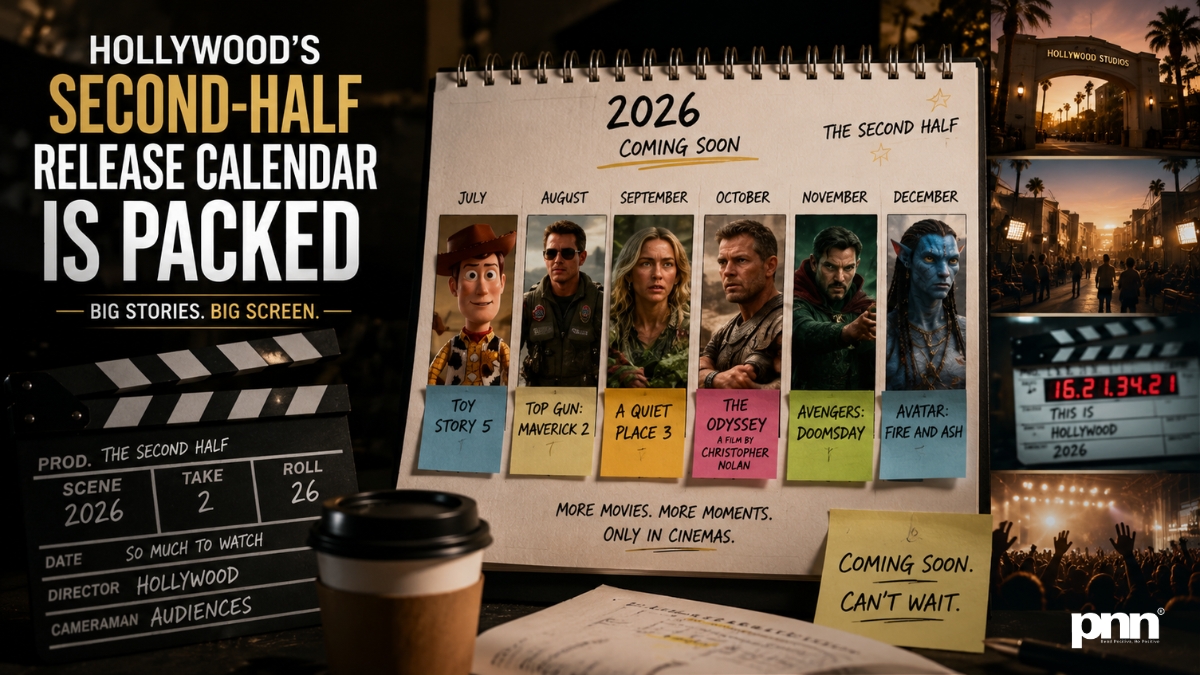
Mumbai (Maharashtra) [India], July 2: As Toy Story, Avengers, and Christopher Nolan’s The Odyssey prepare to dominate cinemas during the second half of 2026, Hollywood is making one thing abundantly clear: familiarity has become one of the industry’s most valuable currencies.
There was a time when Hollywood measured success by introducing audiences to worlds they had never imagined. A giant shark transformed beach vacations forever, an adventurous archaeologist made dusty ruins exciting, and a galaxy far, far away became part of global culture without relying on decades of established branding. Those films weren’t simply successful; they became the franchises everyone else hoped to replicate.
Fast forward to 2026, and the industry’s priorities appear to have shifted. Original storytelling certainly hasn’t disappeared, but it now shares the stage with something considerably more dependable: nostalgia backed by billion-dollar marketing strategies.
The second half of the year’s theatrical calendar is packed with some of cinema’s most recognisable names. Toy Story is returning to theatres, Marvel is preparing another major Avengers chapter, while acclaimed filmmaker Christopher Nolan is taking audiences back nearly three thousand years by adapting The Odyssey into one of the most ambitious films of his career. Around them sits an impressive line-up of sequels, reboots, adaptations, and cinematic universes, each hoping that familiar characters will once again persuade audiences to leave their sofas and return to multiplexes.
That strategy is hardly accidental. Studios are emerging from years of unpredictable theatrical performance, changing consumer habits, and growing competition from streaming platforms. In such an environment, betting hundreds of millions of dollars on stories audiences already recognise feels considerably safer than asking them to embrace entirely unfamiliar worlds.
Perhaps originality hasn’t vanished altogether. It has simply been asked to wait politely in the lobby while the franchises collect another opening-weekend cheque.
The Second Half Of 2026 Could Decide Hollywood’s Financial Year
For Hollywood executives, the calendar isn’t divided into twelve equal months. Instead, it revolves around strategic release windows capable of generating the largest possible audiences. Traditionally, the second half of the year—including late summer, autumn and the holiday season—represents one of the industry’s most lucrative periods, often determining whether annual financial targets are comfortably exceeded or painfully missed.
This year appears no different. Several major studios, including Disney, Universal Pictures, Warner Bros., Sony Pictures, and Paramount, have reserved their biggest theatrical releases for the months ahead. Family entertainment, blockbuster spectacles, awards-season contenders, and franchise expansions are carefully positioned to maximise school holidays, festive weekends, and international markets where theatrical attendance traditionally surges.
The strategy reflects more than confidence; it reflects caution. Production costs have risen dramatically over the past decade, while marketing campaigns have become global operations involving digital promotions, influencer partnerships, immersive fan events, and international premieres. Every blockbuster now carries expectations extending far beyond domestic ticket sales.
Consequently, studios are not simply releasing films. They are launching global entertainment ecosystems, where theatrical revenue becomes only one component of a much larger commercial equation.
Why Familiar Characters Still Sell Tickets
Hollywood’s reliance on established intellectual property often attracts criticism, yet the financial logic remains difficult to dispute. Recognisable characters dramatically reduce uncertainty. Audiences already know Woody and Buzz Lightyear. They understand the Marvel Universe. Christopher Nolan has cultivated a reputation that convinces millions to purchase tickets based solely on his name.
From a business perspective, familiarity lowers marketing barriers. Studios spend less time explaining who the characters are and more time reminding audiences why they loved them in the first place. Emotional recognition becomes one of the most effective advertising tools available.
That familiarity extends far beyond cinema screens. Popular franchises generate revenue through merchandise, gaming, streaming platforms, publishing, licensing agreements, collectibles, fashion collaborations, and theme park attractions. A successful theatrical release frequently stimulates several additional industries simultaneously, creating value long after the closing credits have finished rolling.
Of course, there is an ironic twist. Audiences often declare that Hollywood produces too many sequels, yet opening weekend statistics repeatedly demonstrate remarkable enthusiasm whenever beloved franchises return. Apparently, introducing audiences to something entirely new now requires more courage than fighting Thanos.
At the same time, this dependence on recognisable brands presents an uncomfortable question. If familiar stories consistently outperform original concepts, how frequently will studios be willing to gamble on fresh voices? Creativity thrives on experimentation, but experimentation rarely comes with guaranteed quarterly earnings.
Christopher Nolan’s The Odyssey Changes The Conversation
Among this year’s biggest releases, one project occupies an unusual position. While The Odyssey is technically based on one of history’s oldest literary works, Christopher Nolan’s adaptation hardly resembles a conventional sequel or reboot. Instead, it transforms Homer’s timeless epic into a modern cinematic spectacle expected to combine mythology, large-scale practical filmmaking, and cutting-edge visual storytelling.
Industry reports indicate that the production carries an estimated budget approaching $250–300 million, placing it among the most expensive films ever developed by the director. The ensemble cast reportedly includes major stars such as Matt Damon, Tom Holland, Zendaya, Anne Hathaway, Robert Pattinson, and Charlize Theron, further elevating expectations surrounding the project.
Unlike traditional franchise entries, The Odyssey demonstrates that familiar source material can still feel innovative when interpreted through a distinctive creative vision. Homer may have written the story centuries ago, but Nolan’s adaptation introduces it to an entirely new generation using contemporary filmmaking techniques, IMAX presentation and blockbuster-scale production values.
In many respects, the film represents Hollywood’s most intriguing compromise. It offers audiences something recognisable without asking them to revisit another numbered sequel. That delicate balance between originality and familiarity may ultimately become one of the industry’s most valuable creative strategies.
Animation Still Owns Family Entertainment
If there is one genre Hollywood continues to trust without hesitation, it is animation. Unlike many blockbuster franchises that rely on a specific generation of fans, animated films possess a unique advantage—they constantly introduce themselves to new audiences while retaining the affection of older ones. Few franchises embody that phenomenon better than Toy Story.
When the first Toy Story premiered in 1995, it revolutionised computer animation and established Pixar as one of the industry’s most influential creative studios. More than three decades later, the franchise remains culturally relevant, not because audiences refuse to let go, but because every generation discovers Woody, Buzz Lightyear, and their companions in a different way. Parents who once watched the original film as children are now bringing their own children to cinemas, creating a rare example of entertainment that genuinely spans multiple generations.
From a business perspective, the franchise is equally impressive. Collectively, the Toy Story films have generated billions of dollars through worldwide box-office collections, home entertainment, merchandise, streaming, publishing, and theme-park attractions. The characters have evolved beyond cinema into globally recognised cultural icons, proving that emotional attachment can become one of Hollywood’s most valuable commercial assets.
That success explains why studios continue investing heavily in animated franchises. Family audiences remain among the most reliable moviegoers, particularly during school holidays and festive seasons. Unlike many adult-oriented releases that depend heavily on opening-weekend performance, animated films often enjoy longer theatrical runs driven by repeat viewings and positive word-of-mouth.
Still, the continued expansion of beloved franchises raises an inevitable question. At what point does preserving nostalgia begin overshadowing the next generation of original animated classics? Hollywood undoubtedly needs familiar characters, but tomorrow’s franchises cannot emerge unless today’s studios occasionally take creative risks.
Superheroes Refuse To Retire
Every few months, someone confidently declares that superhero cinema has finally reached its conclusion. Every few months, another major comic-book release arrives to challenge that prediction.
The past few years have undoubtedly presented mixed fortunes for superhero films. Several high-profile releases struggled to replicate the extraordinary box-office dominance witnessed during the late 2010s, prompting frequent discussions about so-called “superhero fatigue.” Critics questioned whether audiences had grown weary of interconnected universes, multiverse storylines and increasingly complex continuities.
Yet the upcoming Avengers installment demonstrates why writing off the genre remains premature.
Unlike standalone superhero adventures, Avengers films function as cinematic events. They unite beloved characters, reward long-term audience investment, and transform theatrical releases into shared global experiences. That distinction carries enormous commercial significance. Marvel productions are no longer simply films; they are international marketing campaigns supported by merchandise, gaming, streaming, licensing agreements, and consumer products that extend far beyond cinema tickets.
For Disney, Marvel remains one of its most strategically important intellectual properties, supporting multiple business divisions simultaneously. Theme parks, Disney+, consumer products, and publishing all benefit whenever interest in the Marvel universe increases.
Of course, expectations are correspondingly enormous. Modern superhero blockbusters frequently carry production budgets exceeding $250 million, while global marketing campaigns can reportedly add another $100–150 million before the first ticket is sold. Success generates extraordinary returns, but failure becomes equally expensive.
Perhaps superheroes have not overstayed their welcome after all. They have simply reached the stage where audiences expect something bigger than another cape—they expect an event.
The Business Behind Blockbusters
Behind every highly anticipated release lies an intricate commercial ecosystem extending far beyond filmmaking itself. Modern studios no longer evaluate success solely through box-office receipts. Today’s blockbuster is expected to generate revenue across numerous platforms, often continuing long after its theatrical run has concluded.
A single tentpole production now supports an extensive network of partnerships involving streaming platforms, premium cinema formats, consumer products, international licensing agreements, gaming collaborations, soundtrack releases, collectibles, fashion brands, and promotional campaigns spanning multiple continents. The movie itself has effectively become the centrepiece of a much larger entertainment enterprise.
Marketing has evolved accordingly. Global premieres, immersive fan experiences, influencer collaborations, social media campaigns, and exclusive IMAX screenings have become standard components of blockbuster launches. In many cases, promotional budgets rival those of independent feature films, highlighting the extraordinary financial commitment required to compete for audience attention.
Today’s blockbuster business model increasingly depends on:
- Worldwide theatrical releases across multiple markets.
- Premium formats such as IMAX, Dolby Cinema, and 4DX.
- Streaming distribution following theatrical windows.
- Merchandising, gaming, and licensing partnerships.
- Brand collaborations with fashion, technology, and consumer companies.
- Long-term franchise expansion across multiple entertainment platforms.
Modern movies no longer stop rolling when the credits appear. They simply change departments.
The Positive Outlook
Despite persistent debates surrounding sequels and franchise dependence, Hollywood enters the second half of 2026 with genuine reasons for optimism. The industry’s confidence reflects more than nostalgia—it reflects carefully calculated market realities.
Several factors continue supporting studio optimism:
- Established franchises significantly reduce financial uncertainty.
- Global audiences immediately recognise familiar intellectual properties.
- Merchandising creates substantial additional revenue beyond ticket sales.
- Streaming platforms benefit from renewed interest following theatrical releases.
- Tourism, hospitality, and local businesses often experience increased economic activity around major film productions.
Equally encouraging is the continued enthusiasm surrounding cinema itself. Following years of speculation about theatres losing relevance, audiences continue demonstrating that large-scale cinematic experiences remain difficult to replicate at home. Premium screens, immersive sound systems, and shared audience reactions continue offering something streaming platforms simply cannot reproduce.
The Risks Nobody Wants To Talk About
Nevertheless, Hollywood’s current strategy is not without consequences.
Dependence on established franchises inevitably narrows opportunities for original storytelling. Independent filmmakers frequently struggle to secure theatrical screens when multiplex schedules become dominated by billion-dollar properties, while emerging creative voices face increasing difficulty competing against globally recognised brands with decades of audience loyalty.
Escalating production costs further intensify the pressure. Many contemporary tentpole productions reportedly require $250–350 million before marketing expenses are considered, while worldwide promotional campaigns can push total investments substantially higher. Under such circumstances, studios naturally become more cautious about experimentation.
Creative fatigue also remains a legitimate concern. Sequels succeed because audiences love familiar characters, but familiarity can gradually become predictability if innovation fails to accompany it. The challenge for Hollywood is therefore not choosing between nostalgia and originality, but discovering how both can coexist without one overshadowing the other.
After all, audiences may happily revisit beloved stories—but they also hope to discover the next unforgettable one.
Hollywood’s Biggest Special Effect Is Confidence
Hollywood’s second-half release calendar reveals far more than an exciting collection of upcoming premieres. It reflects an industry carefully balancing creative ambition, commercial pragmatism, and shareholder expectations in an increasingly competitive entertainment landscape.
Every sequel represents stability.
Every reboot represents familiarity.
Every original blockbuster represents calculated risk.
Studios understand that audiences often claim they want fresh ideas, yet opening-weekend numbers frequently tell a more complicated story. Familiar characters continue filling theatres because they offer emotional certainty in an entertainment market overflowing with choices. Nostalgia has become more than a feeling—it has become one of Hollywood’s most reliable business models.
Yet perhaps the industry’s greatest opportunity lies not in endlessly revisiting the past, but in using familiar worlds as a bridge toward new ones. Films like The Odyssey suggest that timeless stories can still feel innovative when guided by bold creative vision, while beloved franchises remind audiences why they fell in love with cinema in the first place.
Ultimately, Hollywood is not merely selling movie tickets.
It is selling memories, anticipation, shared experiences, and cultural moments that extend well beyond the theatre.
After all, memories may fade.
Apparently, they still sell remarkably well.