
Navi Mumbai (Maharashtra) [India], June 24: India’s Global Capability Centre (GCC) story has entered a new phase.
What began as a cost-arbitrage strategy has evolved into something far more significant. Today, global companies are building centres in India to drive engineering, technology, product development, finance, analytics, cybersecurity, and business operations at scale. As GCCs take on increasingly strategic responsibilities, expectations around infrastructure have changed as well.
The conversation is no longer limited to finding office space. Organisations are looking for workspaces that can be operational from day one, scale with hiring plans, meet security requirements, and support employee experience without creating additional administrative complexity.
This shift is creating opportunities for managed workspace providers that understand enterprise requirements. Among them, Officebing has been steadily building a presence across some of India’s most active business hubs.
The New GCC Reality
Setting up a GCC involves far more than securing desks and meeting rooms.
Leadership teams often work against aggressive timelines. Hiring targets are fixed. Business functions need to become operational quickly. At the same time, organisations must balance flexibility with long-term planning, particularly during the early stages of growth when workforce requirements can change rapidly.
Traditional office leasing models do not always align with these realities. Long lock-in periods, fit-out timelines, facility management responsibilities, and infrastructure setup can consume significant management bandwidth before business operations even begin.
Managed office solutions are increasingly emerging as an alternative because they allow organisations to focus on building teams and operations rather than managing real estate.
Building Workspaces Around Business Growth
Founded in 2017, Officebing began with a simple objective: helping businesses operate from fully managed, ready-to-use workspaces without the burden of day-to-day office administration.
Over the years, the company has expanded its footprint across Mumbai, Navi Mumbai, Gurugram, Hyderabad, Pune, Bengaluru, and other key commercial markets. Today, Officebing offers a portfolio that includes managed offices, private offices, customised workspaces, meeting rooms, conference facilities, virtual offices, training rooms, and enterprise solutions designed for teams of different sizes.
The company’s growth mirrors a broader trend in the workspace sector. Businesses increasingly want flexibility without compromising on professionalism, security, or operational readiness.
For GCCs in particular, that combination is becoming increasingly important.
Why Flexibility Matters for Global Capability Centres
One of the challenges many GCC leaders face is uncertainty around growth trajectories.
A centre may begin with a small team and expand significantly within a relatively short period. In other cases, project-based hiring may create fluctuating space requirements.
Officebing’s workspace model is designed around this reality. Organisations can begin with smaller office configurations and scale into larger managed environments as requirements evolve. Instead of navigating multiple lease negotiations and office fit-outs, businesses can expand within a managed ecosystem built to support growth.
This flexibility is particularly relevant for companies entering India for the first time, where workforce planning and expansion timelines may still be evolving.
Security and Operational Reliability as Core Requirements
For enterprise occupiers, workspace decisions are increasingly influenced by security, technology infrastructure, and operational standards.
Organisations operating in sectors such as financial services, technology, consulting, and business services require environments that support controlled access, data security, network reliability, and business continuity. As GCCs take on larger responsibilities within global organisations, workspace infrastructure is increasingly being evaluated through the lens of risk management, compliance, and operational resilience rather than simply convenience.
Officebing positions security as one of its core strengths. Its workspaces incorporate access-controlled environments, 24/7 surveillance infrastructure, firewall protection, network-separated office environments, and operational standards designed to support enterprise requirements. The company also offers technology infrastructure such as mini data centres and dedicated connectivity options for organisations that require greater control over their digital operations. Businesses from BFSI and IT sectors already operate from Officebing centres, reflecting the growing importance of security-led workspace design in the managed office market.
Equally important is operational reliability.
Fully managed facilities, internet connectivity, meeting infrastructure, maintenance support, reception services, and workplace administration are integrated into the overall workspace offering. This reduces the need for organisations to build extensive internal facilities teams during the early stages of growth and allows leadership teams to focus on scaling operations rather than managing workplace logistics.
The Rise of Enterprise-Grade Managed Offices
The managed office sector itself is evolving.
Earlier generations of flexible workspaces were largely associated with startups and freelancers. Today’s enterprise customers expect a very different proposition: customised environments, brand integration, dedicated collaboration spaces, executive meeting facilities, and infrastructure that reflects the standards of global organisations.
Officebing’s upcoming premium managed office development in Vashi reflects this shift.
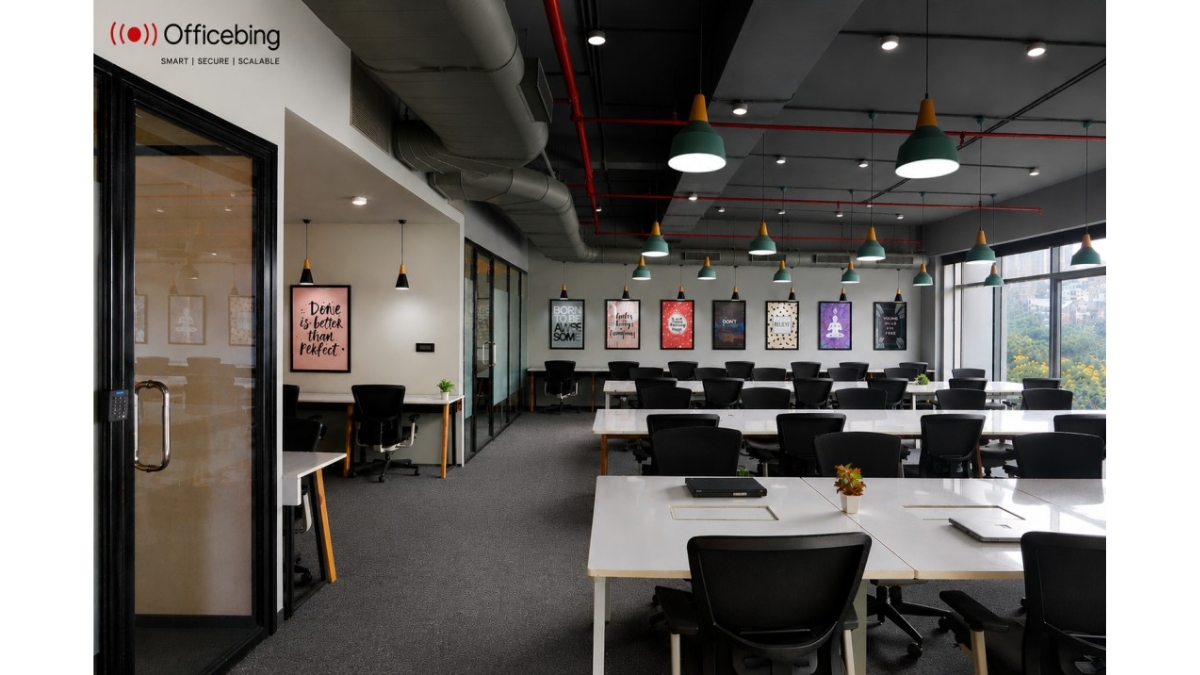
Located on Palm Beach Road, one of Navi Mumbai’s established commercial corridors, the workspace is being designed to accommodate a broad range of enterprise requirements. From private offices and customised layouts to larger managed environments, the facility aims to support organisations at different stages of growth while maintaining operational flexibility.
The development also reflects Navi Mumbai’s growing importance as a business destination. Improved connectivity, expanding infrastructure, and proximity to major commercial zones are increasingly attracting companies looking beyond traditional central business districts.
Supporting the Future of Work
Workspace expectations continue to evolve alongside business needs.
Companies increasingly require environments that support collaboration, focused work, technology integration, employee wellbeing, and organisational culture. They also want solutions that can adapt as workplace strategies change.
Officebing’s approach reflects this broader shift. Alongside traditional office solutions, the company offers facilities such as podcast studios, training spaces, collaboration areas, meeting infrastructure, and customised workplace environments designed around specific business requirements.
Rather than viewing office space as a static asset, the model treats it as an operational platform that evolves with the organisation.
Looking Ahead
India’s GCC sector continues to attract investment from multinational organisations seeking access to talent, innovation, and operational scale. As these centres become more strategic to global businesses, expectations around workplace infrastructure will continue to rise.
The organisations that succeed in building high-performing centres will increasingly be those that can create environments where teams can become productive quickly, collaborate effectively, and scale without disruption.
For workspace providers, this means moving beyond square footage and facilities management to become genuine business enablers.
Officebing’s growth trajectory suggests it understands that shift. By focusing on flexibility, security, operational readiness, and scalable infrastructure, the company is positioning itself not simply as an office provider, but as a workspace partner for businesses navigating India’s next phase of growth.